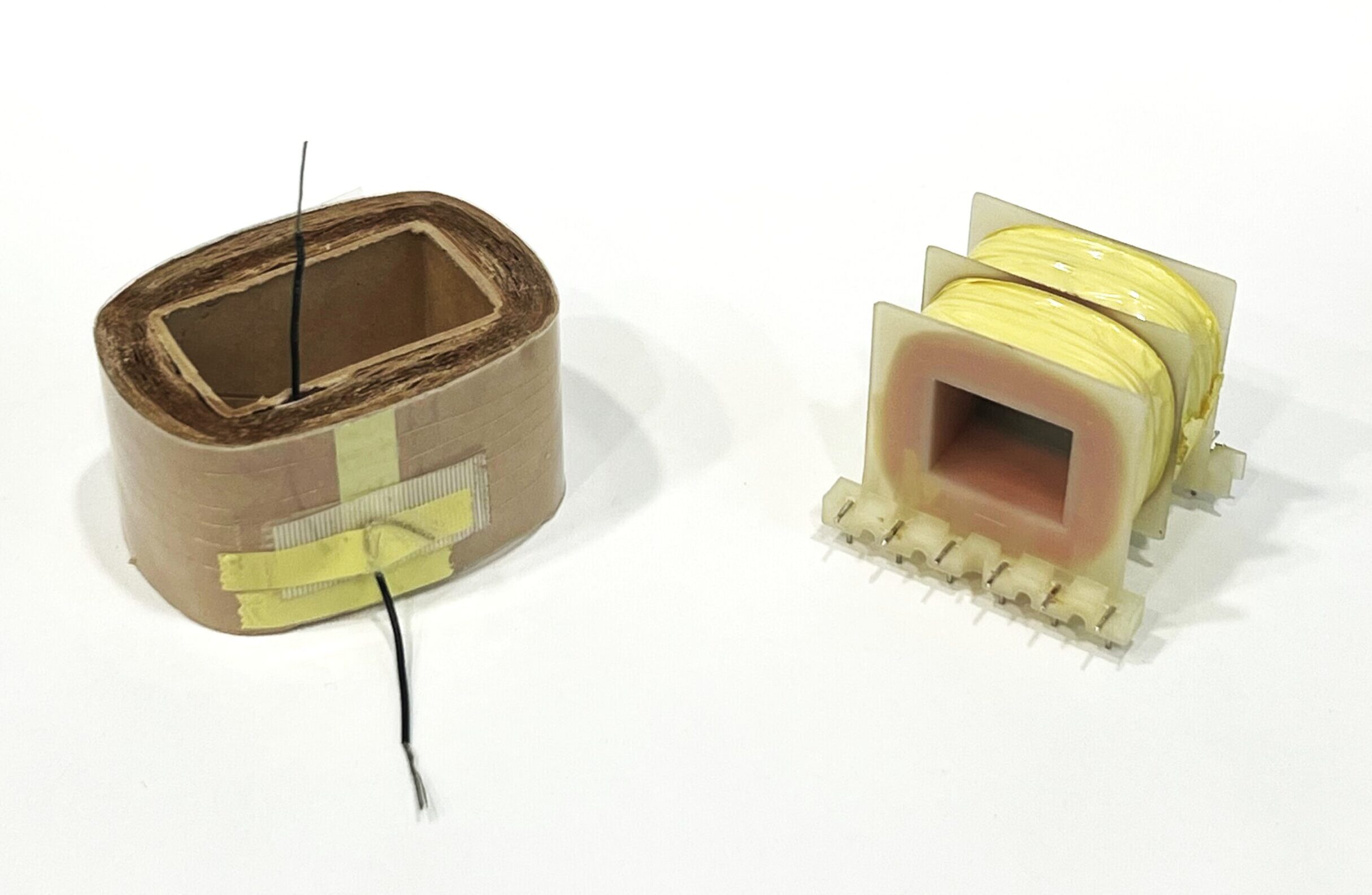
When designing a transformer, the way you arrange the wire around the core directly affects how the part performs in a circuit when designing a transformer. Two common methods are layer winding and bobbin winding. Each technique changes two key electrical properties: leakage inductance and winding capacitance. Understanding these differences helps you pick the right construction for your power supply, converter or filter application.
What Is Leakage Inductance?
Leakage inductance happens when magnetic flux does not link from the main winding to the secondary winding. That stores energy instead of transferring it across and in many switching power supplies, too much leakage inductance creates voltage spikes that can damage nearby components and also lowers efficiency.
What Is Winding Capacitance?
Winding capacitance refers to the unwanted ability of adjacent turns or layers to store a small electrical charge. This capacitance can cause ringing, couple noise between windings or create unexpected paths for high-frequency currents. In general, lower capacitance gives cleaner operation at higher frequencies.
Layer Wound Construction
In a layer wound transformer, you wind the wire back and forth across the full width of the winding window, placing one complete layer of turns on top of another. Usually, you put insulation between each layer.
Impact on Leakage iInductance
Layer winding tends to give lower leakage inductance compared to a simple bobbin wound design with the same number of turns. Why? The primary and secondary windings can be interleaved or placed directly over one another. This arrangement increases the area where the two windings face each other, so more of the magnetic field links from primary to secondary.
Impact on Capacitance
Capacitance brings its very own set of problems. The turns end up acting like a big capacitor when one layer sits directly against the layer above or below it. That extra capacitance causes trouble in high‑voltage or high‑frequency circuit by wasting energy and introducing noise.
Bobbin Wound Transformers
In a bobbin wound – also called section wound or bank wound – transformer, you wind the wire in narrow sections or ‘pies’ across the bobbin. The wire stacks up in a concentrated block instead of covering the entire winding length. You often leave gaps between sections or place primary and secondary sections side‑by‑side.
Impact on Leakage Inductance
You typically get higher leakage inductance with bobbon wound transformers and surface area is the main reason. The primary and secondary windings don’t share much space, so the magnetic flux has to jump a wider gap or push through insulation between sections. That can be a problem in some circuits, but other circuits actually want it. Resonant converters, for example, and certain flyback designs need controlled leakage inductance to work the way they should.
Impact on Capacitance
The main advantage of bobbin winding is lower capacitance. Because the wire does not spread out into many long layers, there is less turn‑to‑turn and layer‑to‑layer charge storage. Low capacitance makes bobbin wound transformers a good choice for high‑frequency switching supplies, RF circuits and medical equipment where noise cannot be tolerated.
Which to Use
Go with layer winding if your goal is low leakage inductance for quick power transfer at moderate frequencies. Just make sure you can handle the extra capacitance using good insulation or shielding.
Bobbin wound transformers work better when your circuit needs low capacitance to keep high‑frequency operation clean. They are also a good fit when you want a predictable amount of leakage inductance, say, for a resonant tank circuit.
At Custom Magnetics, we build both types according to your specifications. Tell us your operating frequency, voltage levels and circuit topology. We will recommend the winding technique that gives you the right balance between leakage inductance and capacitance for your application.