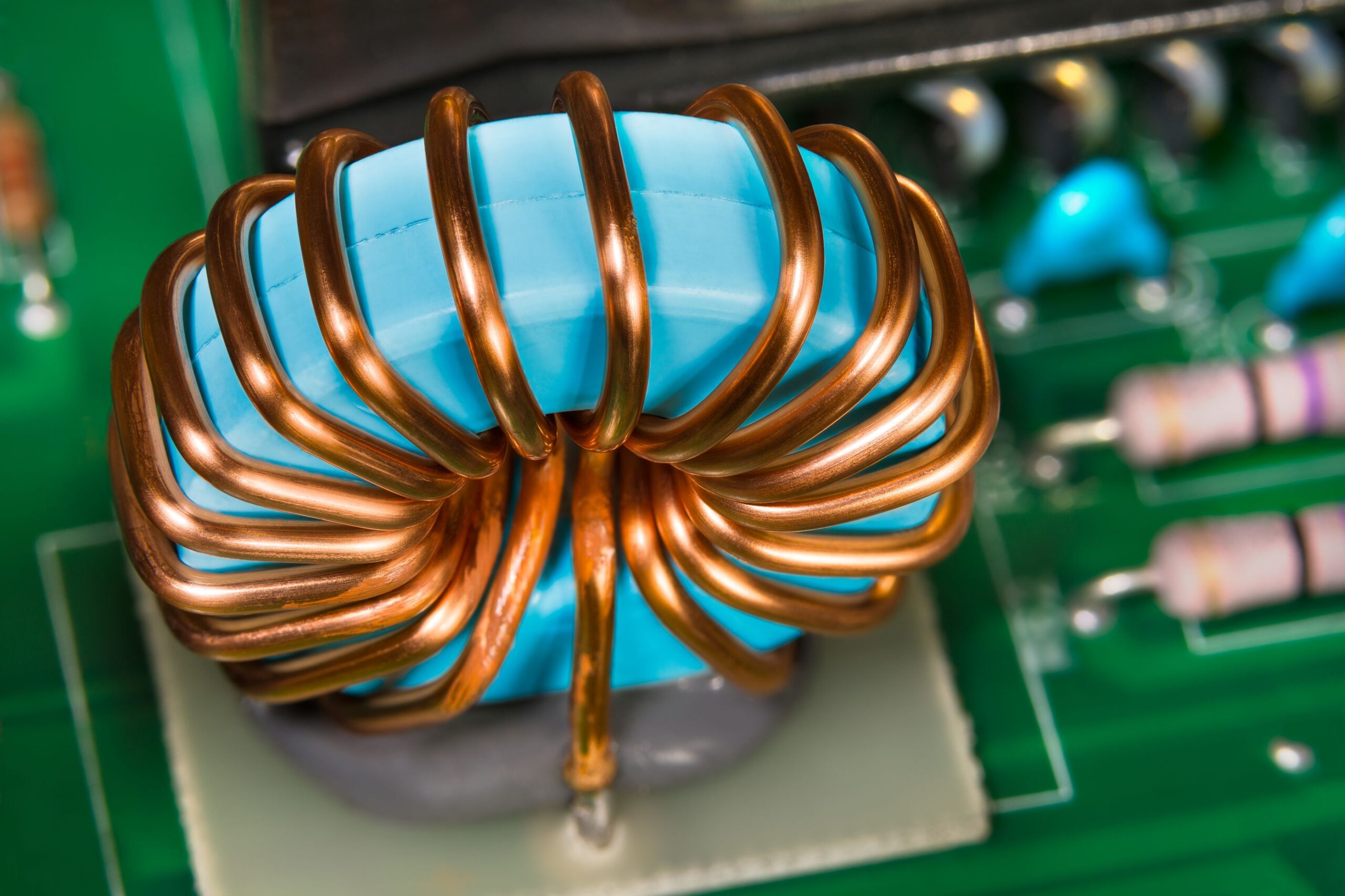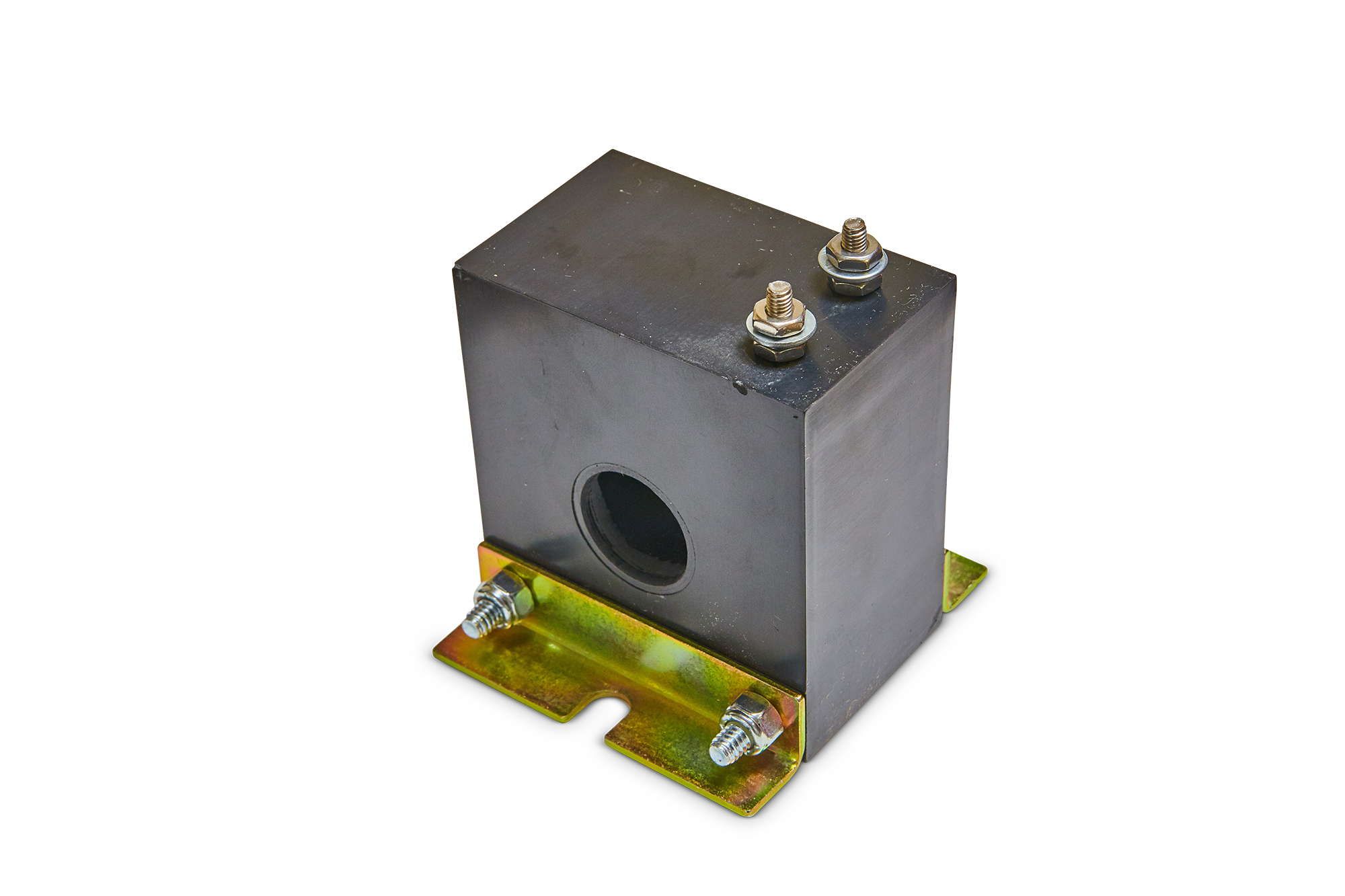
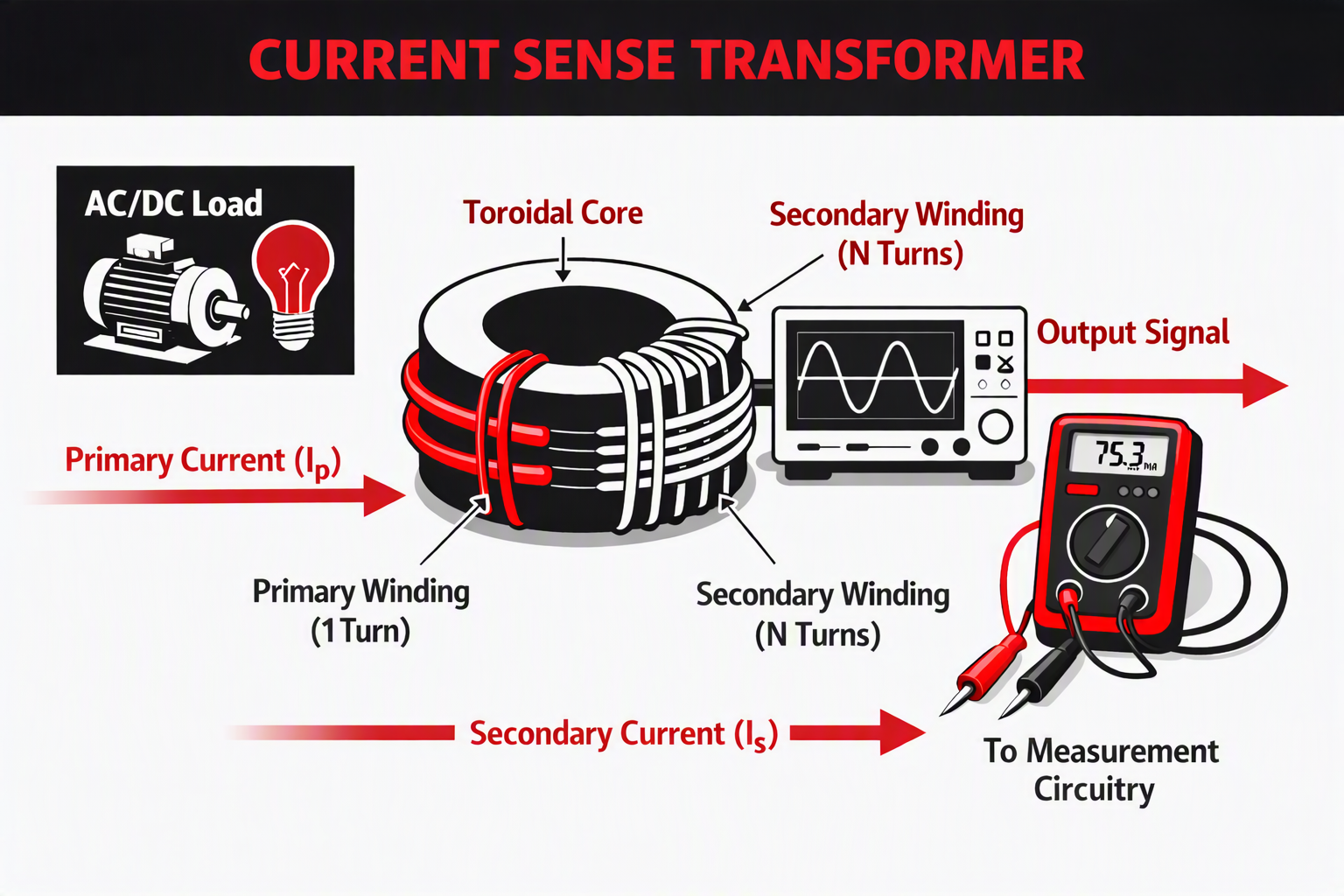
When we design a current sense transformer (CST), we start with the electrical conditions around it rather than choosing a part from a catalog. A current sense transformer uses the magnetic field created by AC current in its primary to produce a proportional secondary signal that a control or monitoring circuit can measure. This gives equipment designers a way to monitor current while maintaining electrical isolation between the measured circuit and the sensing electronics. We see these transformers used for measurement, control, fault detection and circuit protection.
Current Sense Transformer vs. Current Transformer
The terms can overlap, but they often describe different application areas. Current sense transformers are frequently used with electronic monitoring and control circuits, while current transformers may also refer to instrument transformers used in utility, metering and protection systems. At Custom Magnetics, we build current transformers around the output, size, amperage and operating conditions specified for the application.
Common Current Transformer Configurations
A wound-primary current transformer has a dedicated primary winding and can work well when the primary turns, ratio and electrical characteristics need to be closely defined. A toroidal or window-type transformer uses an opening through the core for the conductor and can be a good choice when the conductor can pass through the transformer.
A bar current transformer uses a solid conductive bar as the primary. This configuration can be useful in power equipment where the bus or conductor arrangement is already established. We also work with solid-core and split-core designs. Solid-core units require the conductor to pass through the closed core, while split-core designs can be installed around an existing conductor when access to the circuit is limited.
Selection Criteria That Matter
Start with the maximum and nominal primary current, then define the desired secondary output and turns ratio. Frequency range matters because core materials and transformer designs behave differently as frequency changes. We also need the required accuracy, phase error and burden resistance, along with the expected current range.
Core saturation deserves particular attention. If the magnetic core is driven beyond its intended flux range, the secondary signal can become distorted and the transformer may no longer provide the expected current relationship. Core selection, turns ratio, burden, frequency and primary current all affect this behavior.
The physical requirements matter as well. We need to know the conductor or bus-bar dimensions, available mounting area, package height and other space limitations. Isolation voltage and operating temperature should also be specified, especially when the transformer will be installed in equipment with elevated temperatures or high electrical stress.
Where Current Sense Transformers Are Used
We manufacture current transformers for applications including power supplies, industrial controls, motor drives, energy monitoring, overcurrent protection, charging equipment, test and measurement systems and power distribution equipment. The right design depends on what the secondary signal needs to do and how the transformer will interact with the rest of the circuit.
When a Custom Current Transformer Makes Sense
A custom current transformer can be useful when a standard component does not fit the application. Unusual conductor dimensions, limited package space, specialized secondary outputs, high isolation requirements, demanding temperatures, specific accuracy targets or application-specific mounting can all affect the design.
At Custom Magnetics, we have experience with wound, toroidal and bar-type current transformers. We can engineer a transformer around the required output, size and amperage, provide prototypes or samples where appropriate and use computerized testing equipment during development and production. Our manufacturing environment operates under an ISO 9001:2015-certified quality management system.
Current Sense Transformer Specification Checklist
Click here to submit an RFQ or click here to Build Your Design.
When submitting an RFQ, provide as much of the following as you can:
- Maximum and nominal current
- Frequency
- Desired secondary output
- Turns ratio (if known)
- Accuracy and phase-error requirements
- Burden, insulation or isolation requirements
- Conductor dimensions
- Package limitations
- Operating conditions
If you are working on a current and potential transformer application, we can also review the broader measurement requirements. Submit your current range, output, conductor size and accuracy requirements to begin a custom current sense transformer evaluation.