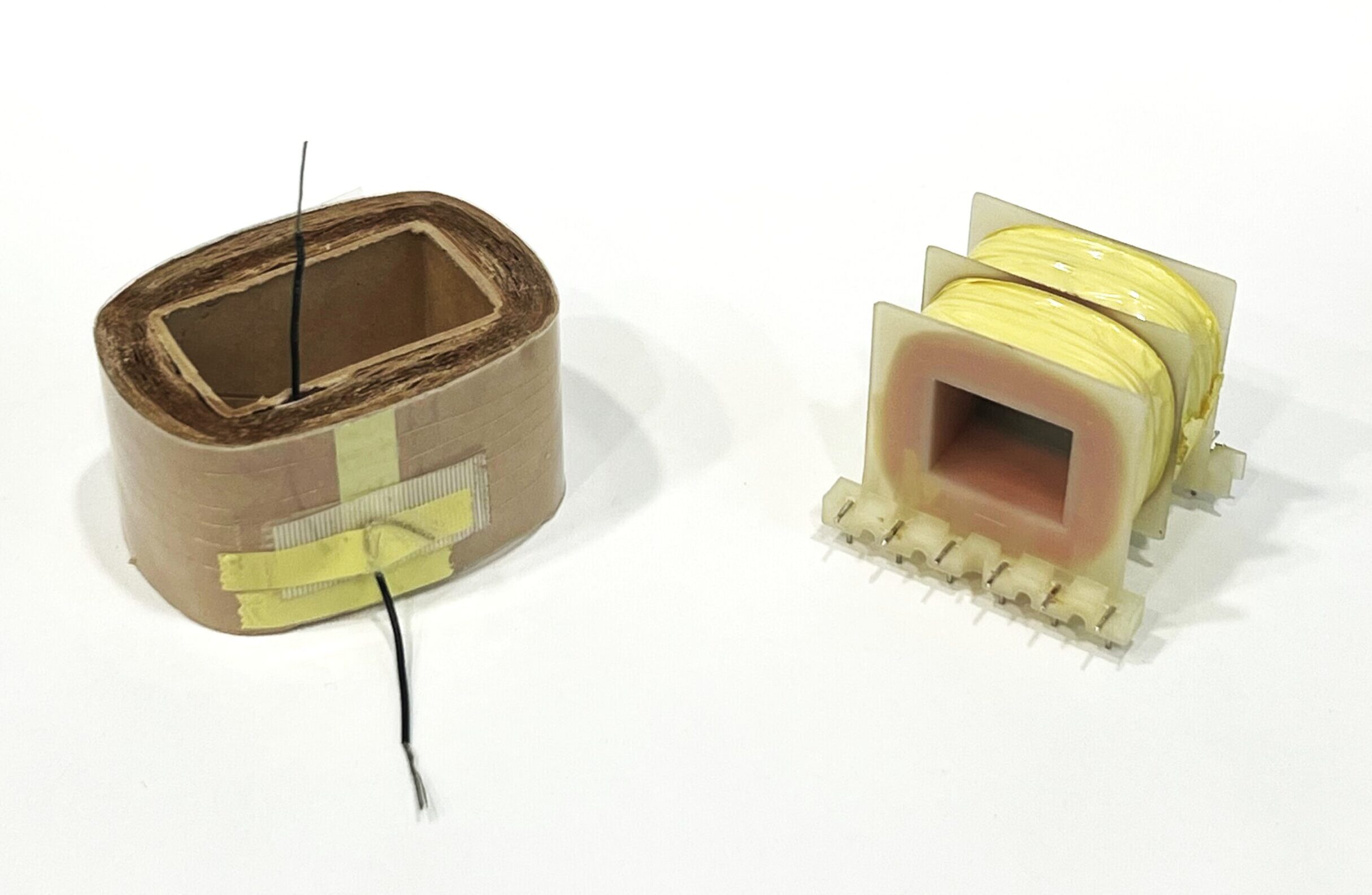
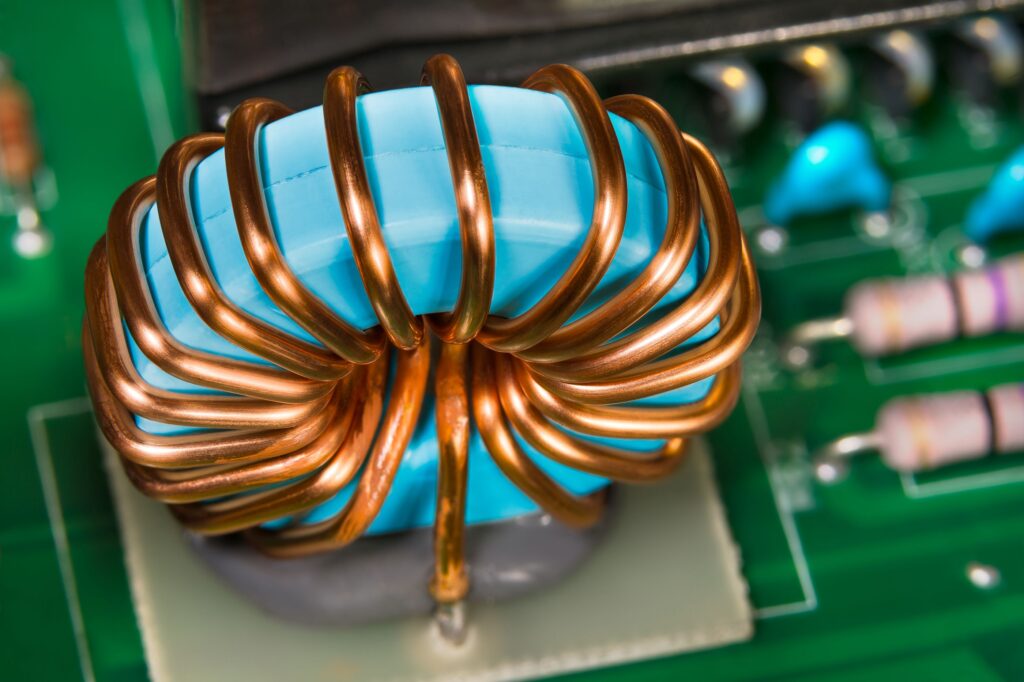
Electrical noise is one of the most persistent challenges in modern electronics. Whether you’re designing a switch‑mode power supply, motor drive, automotive controller or communication device, unwanted high‑frequency interference can degrade performance, disrupt signals, and cause compliance failures. A properly engineered common mode choke is one of the most effective tools for suppressing this noise; but selecting the right design requires understanding your application’s electrical, thermal and mechanical constraints.
This guide explains how common mode chokes work, where they’re used, and the critical criteria engineers should evaluate when choosing or developing a choke for EMI suppression. It also highlights how Custom Magnetics Inc. supports OEMs and contract manufacturers with custom choke design, engineering and manufacturing.
What Is a Common Mode Choke?
A common mode choke is a magnetic component designed to suppress common mode noise which is unwanted high‑frequency signals traveling in the same direction on multiple conductors.
By contrast, the intended differential current (the useful power or signal flowing in opposite directions on the conductors) passes through the choke with minimal impedance. This selective filtering makes common mode chokes essential in systems where noise must be reduced without affecting normal operation.
Common Mode vs. Differential Mode Chokes
Common mode and differential mode noise behave differently; and so do the components designed to suppress them.
- Common mode noise: Appears identically on multiple lines; caused by parasitic capacitance, switching transitions, or external interference.
- Differential mode noise: Appears between two conductors; typically generated by switching currents or load changes.
The difference comes down to winding direction and magnetic flux. In a common mode choke, the windings are arranged so that differential currents cancel out magnetically, while common mode currents reinforce each other and encounter high impedance. Some applications require both common mode and differential mode filtering to meet EMI limits.
Where Common Mode Chokes Are Used
Common mode chokes appear across nearly every industry that relies on power electronics or sensitive signal processing. These applications often face strict EMI requirements, making choke selection critical.
- Switch‑mode power supplies
- Motor drives and industrial controls
- Automotive electronics
- Communication equipment
- Medical and test equipment
- Audio systems
- AC input and power‑line filters
Critical Selection Criteria
Choosing the right common mode choke requires evaluating several electrical, thermal and mechanical factors. Below is a practical breakdown of each.
1. Required Inductance
Higher inductance generally increases noise attenuation, but excessive inductance can impact differential performance or cause saturation.
2. Target Noise-Frequency Range
Common mode chokes must be tuned to the frequency band where noise is present: often tens of kHz to several MHz in switching applications.
3. Impedance vs. Frequency
Engineers should review impedance curves to ensure the choke provides sufficient attenuation across the entire noise spectrum.
4. Rated and Peak Current
The choke must handle continuous and transient currents without overheating or saturating.
5. Core Saturation
High current or DC bias can push the core into saturation, reducing effectiveness. Core geometry and material selection play a major role.
6. DC Resistance & Thermal Performance
Lower DCR reduces heat generation and improves efficiency, but may require larger wire or different winding techniques.
7. Operating Temperature
Applications with elevated ambient temperatures or poor airflow require materials and insulation systems that maintain performance under stress.
8. Insulation & Voltage Requirements
Safety standards may dictate creepage, clearance, insulation thickness, and dielectric strength.
9. Package Size, Mounting & Terminals
Mechanical constraints often determine whether a standard choke fits, or whether a custom design is required.
10. Applicable EMI or Safety Standards
UL, CE, FCC, CISPR, automotive EMC standards and medical compliance requirements all influence choke design.
Core Material Considerations
Ferrite is the most common core material for common mode chokes, but it is not universally superior. Custom Magnetics offers multiple ferrite grades as well as alternative materials to match your noise profile and operating conditions.
The materials used affect frequency response, saturation, core losses, thermal performance, as well as size and cost.
When a Standard Choke May Not Be Enough
Off‑the‑shelf chokes work for some designs, but not all. Custom engineering becomes essential when your application has:
- Unusual noise-frequency ranges
- High continuous or peak current
- Limited space or mounting constraints
- Strict thermal limits
- Challenging EMI targets
- Harsh environmental conditions
Information Needed to Begin a Custom Design
To develop a custom common mode choke, we need to consider the following:
- Input voltage and current
- Target noise-frequency range
- Desired impedance
- Allowable DC resistance
- Physical dimensions and mounting method
- Operating environment
- Applicable EMI or safety standards
This checklist helps ensure the choke is optimized for both electrical performance and manufacturability. If you are unable to provide this information, we can discuss the project with you and add any needed information.
Why Work With Custom Magnetics Inc.?
Custom Magnetics is uniquely equipped to support OEMs that need application‑specific choke solutions. We offer custom choke and inductor design, engineering support, multiple winding and core options, in-house testing, and a ISO 9001: 2015-certified quality system.
Whether you need a modified standard choke or a fully custom magnetic solution, our team can design, prototype and manufacture components that meet your performance and compliance targets.
Need Help Addressing EMI in Your Application?
Send us your electrical, frequency and dimensional requirements to discuss a custom common mode choke. Or contact us for more information. Contact Us & Request a Quote form.