
If the player can hear it, it matters.
Some engineers argue a transformer swap can’t change tone. Players know better. In guitar amps the steel, gap, copper, and winding geometry are tone controls—just hidden ones. Here are the reasons that Push-Pull (PP) and Single-Ended (SE) feel different, as well as three genre playbooks that map tone adjectives to transformer levers.
Two Amplifier Families
- Single-Ended (SE)
One device conducts the whole cycle → DC bias in the core → needs an air gap and usually bigger iron. What you hear: strong 2nd-harmonic warmth, earlier compression/bloom, low-watt magic, less efficiency.
- Push-Pull (PP)
Two devices share the cycle; currents cancel → no DC in the core → no gap, tighter leakage control, more power per pound, hum cancels better. What you hear: cleaner headroom, tight low end, punch; when pushed, more odd-order bite.
The Genre Playbooks: What to Ask for and Why
1. Hard Rock: “Tight, punchy, takes pedals, huge when loud”
Use Case: Big stage, higher gain, palm-mutes that don’t mush.
- Topology: Push-Pull output transformer.
- Core & Size: Slightly larger core for headroom so lows don’t fold when the drummer leans in.
- Leakage & Interleaving: Lower leakage with thoughtful interleaving → extended highs and pick articulation.
- Interwinding Capacitance (Cps): Kept low to avoid top-end smear and to keep feedback stable at gain.
- Primary Inductance (Lp): Adequate for bass corner without over-winding (too high Lp = slow feel).
- Copper / DCR: Lower DCR wind → stiffer feel, immediate attack.
- Power Transformer Pairing: Stiffer regulation (lower winding resistance) for punch; optional small sag if the player wants a bit of chew on big chords.
Tone Result: Fast attack, tight lows, high-volume authority, articulate with drives/boosts.
2. Blues: “Warm mids, touchy, sings when you lean in”
Use Case: Studio or club; expressive right-hand dynamics more important than max SPL.
- Topology: Single-Ended output transformer (or very lightly driven PP for bigger rooms).
- Air Gap: Tuned gap to carry DC without saturating, but not so large that it sterilizes low end.
- Core & Size: Moderate-to-larger core for round bass and bloom; lets the amp breathe without farting out on low E.
- Leakage: Moderate leakage can gently smooth brittle highs.
- Interwinding Capacitance (Cps): Not ultra-low—allow a touch of “air-glue” up top.
- Copper / DCR: Slightly higher DCR permissible for sweet sag/compression.
- Power Transformer Pairing: A bit more voltage droop by design for the classic bloom.
Tone Result: Syrupy 2nd-harmonic warmth, early compression, vocal sustain, big feel at same volume.
3. Funk: “Snappy, glassy, no mud, stays clean under the pocket”
Use Case: Tight rhythm parts, chord stabs, percussive ghost notes; pedals mostly utility.
- Topology: Push-Pull output transformer for clean headroom and bandwidth.
- Leakage & Interleaving: Very low leakage for crisp transients; careful layer sequencing to keep HF open.
- Interwinding Capacitance (Cps): Low Cps so spanky highs stay intact and the comp doesn’t over-soften.
- Primary Inductance (Lp): Enough for full low-E but not over-wound—keeps the amp quick.
- Copper / DCR: Low DCR to minimize droop; immediate note edges.
- Power transformer pairing: High regulation (stiff) so the backbeat doesn’t collapse.
Tone Result: Glassy top, tight bass, precise attack, mixes sit “on the grid” without harshness.
The levers we voice (and why you hear them)
- Core Grade & Lam Thickness (Silicon Steel Family): Sets low-frequency reach and how saturation arrives (bloom vs. brick wall).
- Core Size/Stack: Headroom vs. early compression.
- Air Gap (SE): How much DC bias before saturation; gap = feel knob.
- Primary Inductance: Bass corner vs. copper loss; too much = slow, too little = thin.
- Leakage & Interleaving: Chime and presence vs. smoothness.
- Interwinding Capacitance (Cps): shimmer/clarity vs. glass-softening; interacts with feedback.
- Copper/DCR: Loudness and punch vs. sweet sag.
- Mechanical Build: Potting/clamping lowers buzz and microphonics on loud stages.
One More Piece of the Tone Puzzle: The Choke (Don’t Sleep on It)
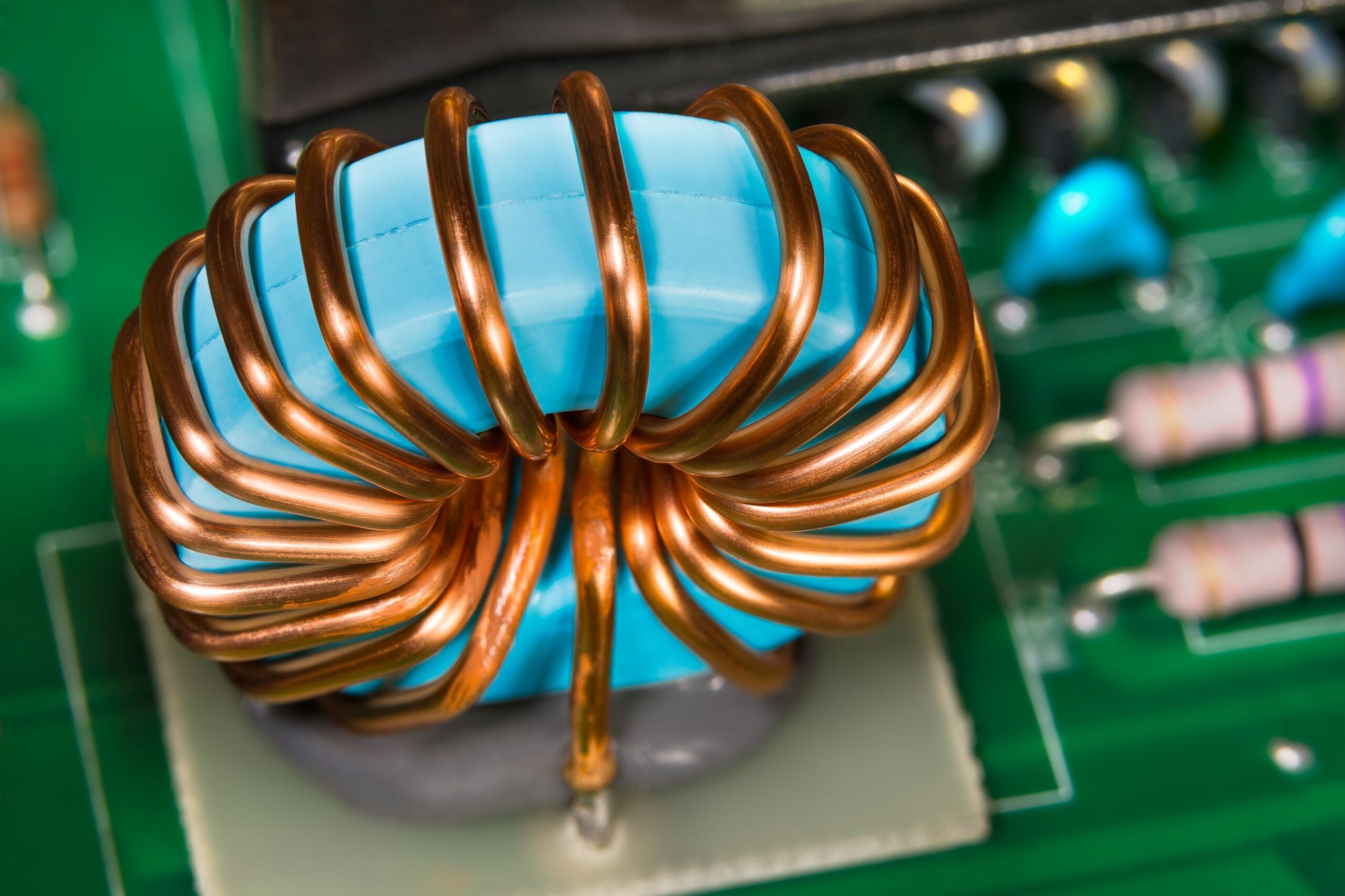
The choke in the power supply often gets overshadowed by the big iron, but it quietly shapes feel, noise floor, and note envelope.
- What Players Hear: Less background hum, smoother note bloom, and a steadier low end when the drummer hits hard.
- Where It Lives: In a CLC filter (cap–L–cap) or as part of a choke-input supply for a stiffer DC rail.
- Why It Matters:
- Inductance (H): Sets how well ripple is filtered—more H = cleaner DC and a calmer noise floor.
- DCR (Ω): Acts like an internal series resistor; higher DCR adds a touch of sag/chew, lower DCR feels tighter/faster.
- Core & Gap: Like SE output iron, a gapped core keeps the choke from saturating under DC. Saturation = grainy feel, rising hum, and “runs out of breath” on low notes.
- Layout & Buzz: physical orientation vs. the output transformer reduces magnetic coupling (hum); solid mounting/potting tames mechanical buzz on loud stages.
- Rectifier Interactions: tube rectifier + higher DCR = vintage squish; SS rectifier + low-DCR choke-input = modern punch.
Quick Voicing Rule-of-Thumb
Chasing tight, clean funk? Think lower DCR and adequate H. Want bluesy bloom? A touch more DCR and H can add the right sag while keeping hum down. For hard rock at volume, prioritize inductance and mechanical quiet so palm mutes stay solid and the amp doesn’t hiss between phrases.
If you’re curious, we can spec choke H/DCR/core/gap alongside the output and power transformers so the whole supply feels intentional.
Build Scope: From Boutique Runs to Tours
- Output & power transformers voiced per genre, wattage, and speaker load.
- Production: 5 to 20,000 parts, prototypes to full runs—built in North Manchester, IN with FAI, fixtures, and lot traceability.
- Docs that travel: Drawings, test limits, tolerances your amp techs and contract manufacturers actually use.
About Custom Magnetics, Inc.
Custom Magnetics is an expert in designing and manufacturing high performance audio transformers, with a long track record going back to 1974. If you’re looking for an industry expert for custom audio transformers, consider partnering with us–contact us today to get started.